Truck Route Restrictions: Bridges, Weight Limits and Hazmat
Restrictions differ by state, county and city, and they change. That is why trip planning by memory stops working once a fleet grows. These are the main categories to plan around.
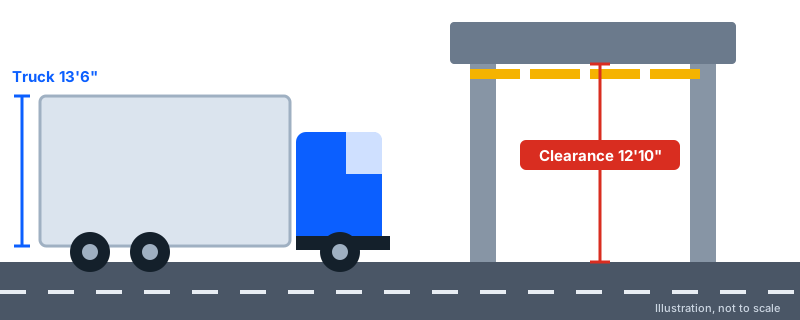
Low clearances
Bridges, overpasses and tunnels post a maximum height. Older urban areas have many low clearances, and the posted figure can be lower than expected after resurfacing. A route planner that knows your actual truck height avoids them before the driver is committed.
Weight limits
Posted weight limits apply to specific bridges and roads. They can be lower than the federal limits that apply on the interstate system, so a route that is legal on the highway can become illegal a few miles off it.
Truck-prohibited roads
Some parkways, residential streets and city centers ban commercial trucks entirely, or restrict them by time of day.
Hazmat routes
Vehicles carrying hazardous materials are often limited to designated routes and barred from tunnels. If you haul hazmat, your navigation must be able to apply that rule, not just the physical dimensions.
What to do about it
- Record each truck's real height, weight and length in the navigation tool.
- Use one navigation tool across the fleet so every driver sees the same restrictions.
- Keep drivers' own judgment in the loop: posted signs override any app.
Note that all of this applies to standard legal-size loads. Oversize and permit loads follow different rules entirely: see our permit and oversize load routing guide.
Want one navigation plan for your fleet?
For companies with 3 or more trucks, we can introduce you to Trucker Path's fleet team.
Get a free introductionDisclosure: This site is independent and is not Trucker Path. We may earn a commission if a company we introduce becomes a Trucker Path customer. This does not change what you pay. This guide is general information, not legal or compliance advice; always follow posted signs and your state's rules.